Friday, November 21, 2014

College Rapes, Sexual Assaults: America’s Nightmare

It has been my privilege to conduct extensive security initiatives over the years for colleges and universities.

These have included:
•Hiring, management, and training of security personnel
•Collaboration with law enforcement
•Development of post orders and emergency plans
•Keynotes for law enforcement, security directors, managers, and supervisors
•Serving as spokesman for families victimized by the Virginia Tech tragedy and the completion of a report on their behalf
•Publication of numerous articles, blogs, and a book
•Police academy presentations for law enforcement seeking crime prevention practitioner certifications

Aside from these security initiatives, I have also been privileged to conduct many programs in character, ethics, and leadership, which in my opinion are inseparable from security at campuses.

Staggering Statistics

A January 2014 White House report titled “Rape and Sexual Assault: A Renewed Call to Action” clearly paints the enormity of the crisis on college campuses:

•1 in 5 women have been sexually assaulted while in college
•Dynamics of college life with the “get high” culture fueling the problem with many victims being drunk, under the influence of drugs, passed out, or otherwise incapacitated when violated
•Perpetrators preying on incapacitated women and sometimes providing them with alcohol and drugs
•The “party mentality” problem with 58 percent of incapacitated rapes and 28 percent of forced rapes taking place at parties
•Campus perpetrators equating to repeat serial offenders—an average of six rapes each
•Lack of reporting sexual assaults by student victims to law enforcement—an appalling average of only 12 percent report the crimes
•Low arrest rate—approximately 12 percent of 238,000 annual rape and sexual assault victims result in arrests

A 2012 report by the CDC paints additional disturbing facts:
•Among sexual violence victims raped since their 18th birthday, 31.5 percent of women and 16.1 percent of men reported a physical injury with 36.2 percent of women requiring medical treatment
•During 2004–2006 an estimated 105,187 females and 6,526 males aged 10–24 received medical care in emergency rooms as a result of nonfatal injuries sustained from sexual assault

Character Education and Leadership Initiatives

As mentioned earlier, during the many years that I have been conducting security initiatives, I have done so by integrating character and leadership programs as part and parcel to the issue. Security and character are inseparable in efforts to safeguard campuses. These initiatives paint the importance of this cohesion:
•“Transforming American Schools: The Heart and Brick of Security”—my signature presentation on school/campus security and character education that has been conducted for law enforcement personnel and educators nationwide
•“Be a Person of Character: Change the World”—a presentation conducted for students from middle school through college
•Articles, blogs, and a newest book and this weekly Epoch Times column that continually emphasize the importance of integrating security with leadership and character development
•Training initiatives for all elements of society—students, families, corporations, educators, government leaders, and law enforcement that present security as inseparable from character, ethics, and leadership. Just this year, events at The Richard Stockton College of New Jersey titled Inaugural Conference: Character, Ethics, Leadership and Be a Person of Character: Change the World at Monmouth University were both filled to capacity with over 1,000 law enforcement officials, students, and family members

Final Reflections

America must enhance and integrate security and character education initiatives at our colleges and universities.

Each and every week we see tragic headlines of rape and sexual assaults as well as the violation of ethical principles that breach the call to “do unto others as you would have them do unto you.”

Only when America integrates cutting-edge security measures including physical, personnel, and emergency procedures with character education that emphasizes leadership and ethical responsibility will we be on the right track for reawakening the nation.

Photos
1. U.S. Sen. Kirsten Gillibrand and officials join student survivors in announcing support for a bipartisan effort in Congress to confront the scourge of sexual violence on college campuses. The announcement took place in New York on Aug. 13, 2014. (Samira Bouaou/Epoch Times)
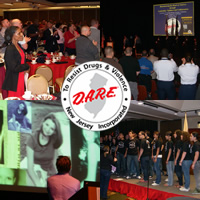
2. Hundreds of law enforcement and educators assemble at the D.A.R.E. NJ April 29, 2009 conference prior to a keynote titled "Reawakening the Heart of America: Leadership, Vigilance , Collaboration" by Vincent J. Bove. (Vincent J. Bove)
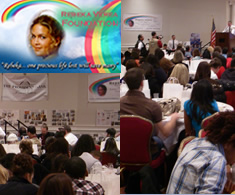
3. Over 500 students from Bergen and Hudson counties in New Jersey at the annual Rebeka Verea Foundation symposium on March 31, 2009 prior to a presentation titled "Be a Person of Character: Change the World" by Vincent J. Bove (Vincent J. Bove)

Note Well
As originally published in Vincent's weekly "Reawakening the Nation" column in the Friday, Nov. 21, 2014 edition of the Epoch Times.

Labels: , , , , , , , ,

Friday, May 09, 2014

America's High-Seeking Culture: Prom Night Alert

Although prom night should be an enchanted memory lasting a lifetime, for many it becomes a night of trauma and loss of life.

Despite America’s under the influence culture, being high on prom night is never an acceptable rite of passage, especially when combined with driving-a toxic combination.

As I drove past Millburn High School in New Jersey this week there was a sobering reminder of a prom night tragedy. A wrecked Mustang sedan was on the lawn at the main entrance of school property.

School officials hope it will remind students and parents of the serious repercussion of irresponsibility.

Similar wrecked vehicle exhibits can be observed at schools nationwide during prom season when lives are lost due to our high society absurdity.

Aside from grim news reports of vehicle fatalities, there are other prom season afflictions including date rape, sexual assaults, unintended pregnancies or STD’s.

Prom Safety
The Centers for Disease Control and Prevention promotes prom safety including:

•Just say no to drinking and driving which is responsible for over 4,500 deaths among young people per year.
•Do not get into vehicles with drivers under the influence.
•Dating violence-verbal, emotional, physical or sexual-is never acceptable. Speak up and report abuse.
•Prom parties deserve responsible supervision-free of alcohol and drugs. Trusted family members should always know where students are and respond immediately should the need arise.

Tragedy to DWI Prevention Champion
On Tuesday, March 25, 2014, I attended the 25th Anniversary of Life Dinner in honor of Steven Benvenisti, Esq. in Washington Township, New Jersey. The event-attended by 300 friends, family and students, commemorated Steven’s miraculous escape from death after being struck as a pedestrian by a drunk driver while he was on spring break as a college student.

Steven told his story.
“Six weeks before graduation, I went to Daytona Beach, Florida with my fraternity brothers for Spring Break. One night while we were walking, a repeat offender drunk driver lost control of his vehicle and crashed into my legs, with my face smashing through the outside windshield and my body being thrown 70 feet. I sustained catastrophic injuries including:

•Severe brain damage
•Comatose for 10 days
•Crushed lower legs
•Fractured clavicle
•Significant loss of blood requiring transfusions
•Horrible open flesh wounds necessitating emergency skin grafting

“My family was asked permission for organ donation because the severe brain damage, brain bleeding and swelling, meant survival was not likely and if I did survive, that I would be completely and totally disabled.”

Steven dispelled all odds through sheer determination and went on to graduate law school, raise a family and become a certified Civil Trial Attorney by the Supreme Court of New Jersey.

He shows his appreciation for life by representing personal injury victims and educating students on impaired driving dangers and traumatic brain injury. Steven has addressed tens of thousands of students during the last 25 years, turning his adversity to triumph by empowering them to say “no” to drinking and driving.

Final Reflection
Tragic prom night headlines are rampant due to America’s under the influence society. But these tragedies are preventable by empowering youth to say no and encouraging them to lives of character through example, vigilance and guidance.

As published in Vincent's weekly column for the Epoch Times on Friday, May 9, 2014.

Photos
1.Mustang wreck on the lawn at the entrance of Millburn High School, New Jersey reminding students during prom season of the dangers of driving under the influence. May 5, 2014 (Vincent J. Bove)
2. Attendees at the “25th Anniversary of Life Dinner” of Steven Benvenisti, Esq. on March 25, 2014 at Seasons in Washington Township, New Jersey. (Vincent J. Bove)
3. PowerPoint slide from Steven Benvenisti’s “25th Anniversary of Life Dinner” PowerPoint presentation on March 25, 2014 at Seasons in Washington Township, New Jersey. (Vincent J. Bove)

Note Well: A more comprehensive version of this blog and Epoch Times column, including "Vital Signs: Drinking and Driving Among High School Students", "Dating Violence" and "Warning Signs of Teen Substance Use" was published in The New Jersey Police Chiefs Magazine, June 2014 edition.


Labels: , , , ,

Wednesday, March 26, 2014

Spotlight On: Steven Benvenisti, Esq. - 25th Anniversary of Life Celebration

On Tuesday, March 25, 2014, I proudly attended the 25th Anniversary of Life Dinner in honor of my friend Steven Benvenisti, Esq. The event, attended by 300 friends, family, students and community leaders, commemorated Steven’s miraculous escape from death after being struck as a pedestrian by a drunk driver. The horrific accident caused catastrophic brain and orthopedic injuries as well as a 10 day coma. Although Steven had little chance for survival, he dispelled all odds through his hope and determination.

Steven shows his profound appreciation for life by giving back through representing personal injury victims and educating students on drunk driving dangers and traumatic brain injury. He does this through inspiring presentations that have touched countless lives and his compelling book titled Spring Break: A True Story of Hope and Determination.”

As immediately as we met in 2007, Steven and I became great friends. Yet, Steven is also an inspirational model of perseverance whose life shines bright through his character, generosity and courage.

Spotlight On: Mr. Steven Benvenisti, Esq.-March 28, 2007 Blog

Although there are many speakers, seminars, symposiums, conferences, in-service days and presentations, there are times when an individual stands out by the efficacy of words so clearly spoken from the heart.

Steven Benvenisti, an attorney at law and motivational speaker is one such individual who was able to transform an audience on Tuesday, March 27, 2007 at a monthly meeting of The North Jersey Regional Crime Prevention Officers Association at the Petrocelli College of Continuing Studies of Fairleigh Dickinson University in Teaneck, New Jersey. The event turned an ordinary day into a truly memorable experience as Steven presented "The Most Significant Case of My Entire Life."

[Reprinted from the Event Handout]

For more than 10 years, Steven Benvenisti, an award winning motivation speaker and personal injury attorney has been featured on television, radio and appeared before thousands of people to share his story of the most significant case he has ever handled. The lessons learned from this case have inspired individuals and audiences throughout America. As a result of this case, Steven Benvenisti has devoted his legal career towards representing personal injury victims, DWI victims and others including those suffering from traumatic brain injuries, spinal cord injuries and other catastrophic injuries. Steven Benvenisti has been honored with many awards including an official proclamation by the Governor of New Jersey, a Joint Resolution of the New Jersey Senate and Assembly; and Resolutions by both The United States Senate and The U.S. House of Representatives. Steven is a member of the Teaneck, New Jersey based law firm of Davis, Saperstein & Salomon, P.C.
During his presentation, Steven stressed the following:
  • There are too many high school and college students who are victims of DWI and many are tragically fatalities. Steven's personal mission with the thousands of students he speaks to is to end DWI.
  • The problem has no quick fix but the message must be clear and consistent, "Do not drink and drive."
  • The Most Significant Case of My Entire Career was about a New Jersey College Student who excelled academically, socially and athletically. Yet, his world changed dramatically during a spring break fraternity brothers trip to Daytona, Florida.
    • While walking with his friends on a evening that all of them were alcohol free, this student was hit by a vehicle being driven by a driver under the influence at 50 miles per hour. The student had both of his legs crushed immediately and witnesses explained hearing a "horribly unusual exploding sound" in explaining the impact of the vehicle upon the student's body. He was thrown 70 feet away, suffered from intense bleeding and both legs were terrible disfigured. The sight was so distressing that many of the bystanders were sobbing as they watched his two friends try to assist him.
    • The police responded almost immediately, found the victim's wallet and called the victim's home. Due to the hour, his mother immediately sensed that something was seriously wrong. The family was told to stand by and await the doctor's call. Each minute the father, mother and three brothers and sisters waited seemed like an eternity.
    • When the doctor called, he explained that the son had been hit by a car, that portions of the bones in his left leg were missing, he lost a tremendous amount of blood and the brain was seriously swelling. The father asked the doctor, "What are my son's chances of living?" Hearing this had a chilling effect on the family who were listening to each of his words . The doctor explained that the young man could die within hours and received permission to use his organs should he die. The family rushed to the airport and was able to board a flight to Daytona within 90 minutes.
    • After being in a coma for 10 days, the student opened his eyes but did not recognize his parents, could not speak and had no short term memory. His legs were an orthopedic nightmare. Yet, this student eventually recovered, went on to live a life happier than ever imagined and became the inspiration for the great mission of Steven Benvenisti.
According to Steven, Madison Square Garden can be filled to capacity with the amount of people killed each year by a drunk driver. And Steven Benvenisti is on a mission to empty the arena.


READ MORE

CDC Impaired Driving Fact Sheet Click here to visit site
MADD Click here to visit site
SADD Click here to visit site
Potsdam University
Alcohol Problems & Solutions
Click here to visit site
Contract for Life Click here to visit site

Labels: , , , ,

Friday, May 01, 2009

D.A.R.E. NJ 2009 Conference: Trends, Changes and Challenges


D.A.R.E. New Jersey, in collaboration with law enforcement, schools, parents, community and governmental agencies, will provide premier leadership, guidance, direction and program materials to D.A.R.E. Officers, parents and educators in order to deliver a comprehensive drug and violence prevention curriculum and supportive programs to the State's youth and communities.
— D.A.R.E. NJ Mission Statement


The 2009 D.A.R.E. NJ annual state training conference titled Trends, Changes & Challenges was held in Atlantic City, New Jersey from April 28-30, 2009 and was attended by over 300 D.A.R.E. officers, educators, military personnel, community leaders and students. Nicholas R. DeMauro, Chairman & CEO and Dr. Barbara Allen-Walker, Director of Training and Education are to be commended for their leadership with coordinating this event.

The conference featured educational training by speakers addressing contemporary issues that affect youth including:

  • Students with Behavioral Challenges
  • Character Education
  • School Violence Prevention
  • Crisis Management
  • Alcohol Abuse, Illicit Drugs/Steroids, Prescription Drug Alert
  • Educational Principles of Working with Youth
  • Exploitation of Children
  • On line Social Networking and Technology
  • Military Families
  • Suicide Prevention
  • Gangs and Guns
  • Domestic Violence

One of the highlights of the conference was the presentation of Craig Scott, a student at Columbine during the April 20, 1999 tragedy, who was in the school library where ten classmates were killed and over twenty wounded. He would later discover that his sister, Rachel Joy Scott, was the first student killed. Craig travels the country speaking about the compassion and kindness of his sister and offering hope through Rachel's Challenge:

  1. ELIMINATE PREJUDICE
    by looking for the Best in Others
  2. DARE TO DREAM
    Set Goals—Keep a Journal
  3. CHOOSE YOUR INFLUENCES
    Input Determines Output
  4. KIND WORDS
    Small Acts of Kindness = Huge Impact
  5. START A CHAIN REACTION
    With Family & Friends

As the keynote speaker for the conference, my presentation was titled Reawakening the Heart of America through Leadership, Vigilance and Collaboration and included reflections on the effect of drugs and alcohol on our "under the influence" society, especially our youth.

PRESENTATION AGENDA

  • WHY ARE WE HERE?
  • CONTEMPORARY CONCERNS
    • Head On Collision
    • Crisis of Leadership
    • Culture of Violence
    • Shattered Communities
    • Filling the Void
  • REAWAKENING THE HEART OF AMERICA
    • Progress and Priorities
    • The Altruism FactorTM
    • Ingredients for Transformation
    • Character: The Heart of the Matter
  • CALL TO ACTION
  • TRIBUTE TO AMERICAN MILITARY
  • CONCLUSION

It was a privilege to meet so many law enforcement, school, military and community leaders who are dedicated to touching the hearts of their students and transforming New Jersey families and communities. I was honored that each received a copy of Listen To Their Cries thanks to the generosity of D.A.R.E. N.J.

READ MORE

D.A.R.E. NJ Click here to visit site
Rachel's Challenge Click here to visit site
Craig Scott at 2006 White House School Safety Conference Click here to visit site
Character Education Partnership Click here to visit site
Alcohol Blogs Click here to visit site
Drugs Blogs Click here to visit site

Labels: , , , ,

Wednesday, April 01, 2009

Be a Person of Character: Change the World


To bring new consciousness to families and to educate teens about the dangers of driving irresponsibly or being the passenger in the hands of an irresponsible driver.
Objective of the
Rebeka Verea Foundation


On Tuesday, March 31, 2009, thanks to the leadership of Dr. Jorge L. Verea and his wife Lourdes, over 400 high school students from Bergen and Hudson Counties in New Jersey attended the 4th Annual Rebeka Verea Foundation Symposium in Cliffside Park.

On the night of June 20, 2005, 18 year-old Rebeka Verea was killed in a car accident just a few miles from her home. Earlier that day, she had graduated from Cliffside Park High School.

Dr. and Mrs. Verea knew they had to turn their grief into action. They started the Rebeka Verea Foundation to honor their daughter's life because "the death of our children should not be in vain."

Speakers for today's symposium were Dr. Jorge L. Verea, Dr. John J. Locurto and Melian Gonzalez, RN of the Trauma and Injury Center at Hackensack University Medical Center; Violet Marrero of the New Jersey Division of Highway Traffic Safety; Detective Arnold Anderson of the Essex County Prosecutor's Office; Charles Fleisher of the Kessler Foundation; and Chief Donald Keane and Captain Anthony Frato of the Cliffside Park Police Department.

As an invited speaker, I delivered a presentation titled Be a Person of Character: Change the World which encouraged students to respond to a culture of violence, crisis of character and under the influence society with character. These students were reminded that

"No matter how young or old, no matter how rich or poor, no matter how famous or ordinary, each of us has the power to change the world by doing what is right."

High Schools Represented

  • Academies at Englewood High School
  • Bergen County Academies
  • Bergenfield High School
  • Bergen County Technical High School, Paramus
  • Cliffside Park High School
  • Dwight Morrow High School
  • Emerson High School (Emerson, NJ)
  • Emerson High School (Union City, NJ)
  • Fort Lee High School
  • Memorial High School
  • North Bergen High School
  • Pascack Hills High School
  • Ridgefield Memorial High School
  • Ridgefield Park High School
  • River Vale High School
  • Teaneck High School
  • Union City High School

The Vereas are to be commended for their zeal and commitment to communicating the dangers of irresponsible driving so that the death of their daughter Rebeka may not be in vain.

READ MORE

Rebeka Verea Foundation Click here to visit site
Centers for Disease Control and Prevention/Impaired Driving Click here to visit site
Driving Under the Influence of Alcohol or Illegal Drugs Click here to visit site
America's Youth: A Generation of Hope Click here to visit site

Labels: , , , , , , ,

Thursday, June 14, 2007

Prom Tragedy Prevention: Community Policing Initiative

On Thursday, June 14, 2007, I was invited by Chief Michael Saudino of the Emerson Police Department in Bergen County, New Jersey, to witness an extraordinary community policing initiative. Seniors from Emerson High School were reminded of their obligation to be responsible, vigilant and safe so prom night can be remembered as a celebration of their youth.

Captain David F. Hayes of the Emerson Police Department, who also serves as its Emergency Management Coordinator, put together the fifth annual prom safety awareness program with the collaboration of:

  • Emerson High School
  • Emerson Police Department
  • Bergen County Prosecutor's Office
  • Bergen County Medical Examiners
  • Hackensack University Medical Center
  • Emerson Fire Department
  • Emerson Ambulance Corp
  • Rich's Auto Body Specialists
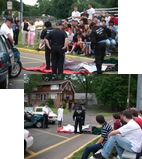
The program included a simulated accident with a drunk high school driver causing the fatality of a friend in the vehicle. Individuals in a second vehicle were also injured in the accident.

After the simulation, the training event moved to an Emerson court room where arraignment, fines, license revocation, death by auto charges and civil lawsuit issues were explained by a judge. Compounding these punishments is the life long memory that one's irresponsible behavior took the life of a friend.

The community of Emerson is to be commended for this tragedy prevention model for the nation and working to make the prom an event to cherish rather than to mourn.

READ MORE

SADD – Planning a Safe Prom Click here to visit site
Vincent Bove May 7, 2007 Blog Click here to visit site

Labels: , , , , , , ,

Monday, May 07, 2007

Prom Season: A Call to Vigilance

As prom season approaches, I am reminded of a scene I witnessed while waiting to board a ship for a party cruise along the Hudson River with the beautiful New York City skyline as the backdrop. As over one hundred magnificently clad 15-17 year olds began to arrive in limousines and party buses, they looked ready for a red carpet event. But appearances can be deceiving — many of them were so seriously under the influence (staggering, tripping over each other, vomiting and falling on the boardwalk) that the police and ambulance had to be called. The security director rightfully denied access to the boat and immediately made the correct decision to terminate the cruise.

What was supposed to be a night of joy and celebration became a sadly disappointing night for a sixteen year-old girl and her family who had gathered for a sweet sixteen birthday party.

Too many teenagers believe that being under the influence for these events, including prom night, is an acceptable right of passage. Too many parents, older family members and even educators have become enablers by their apathy, acceptance, or even by their encouragement that getting high is part of growing up.

It is neither acceptable nor mature and vigilance is needed for the prom and other teenage activities. Appropriate parental and adult presence is necessary to prevent more tragedies from occurring that can change families and communities forever.

[Reprinted from http://life.familyeducation.com/teen/prom/36549.html]

Prom Safety
Carleton Kendrick, Ed.M., LCSW

What Parents Worry About

High-school proms are very expensive affairs. When you add up the prom dresses and tuxedos, prom tickets and pictures, stretch limos, extravagant dining, flowers, and those special hairstyles and French manicures, it's not unusual for the tab to top $1,000. A prom bill, especially for seniors, may also include renting motel or hotel rooms for all-night, post-prom partying. High school goes Hollywood.

For parents, however, the primary prom-related concerns aren't financial. Our biggest prom worries are the risky behaviors associated with proms, most specifically driving under the influence of alcohol and drugs and unsafe sex. Prom night always seems to be linked with drunken-driving injuries and deaths, date rapes, pregnancies and STDs. It's become the night where teens' poor judgment and dangerous choices have become institutionalized.

Think back to your own proms. While much more expensive and self-indulgent than yours were, the hopes, disappointments, joys and dangers associated with proms have remained essentially the same. The following tips may ease your prom anxieties, while helping to keep your kids as safe as possible:

Prom Safety Tips

The Talk -- Tell your children that you want them to have a wonderful, memorable prom. Keep that wish as a central focus. They need to give you their complete itinerary for the evening, including whom they will be with, where they'll be going after the prom and the phone numbers where you can contact them. "We'll just be driving around" is not an acceptable response. Come to a fair decision on a curfew, based upon your children's past level of responsibility in this area. Express your concerns about their health and safety and explain to them why prom night makes it more difficult to make safe and smart decisions. Don't be vague -- discuss drinking, drugging, driving under the influence, and sex. Ask them how they plan to keep safe and avoid actions they will regret. Reinforce your belief in their character and in their ability to act responsibly.

The Ride -- If they're not driving themselves, you must know who'll be driving them. Regardless of how many times you have talked about the dangers of driving under the influence of alcohol and drugs, emphasize that these dangers are particularly high on prom night. Your children cannot drink or take drugs and drive. They also must be driven by someone who has not drunk alcohol or taken drugs. You need their promise on these rules. These rules are non-negotiable.

The Connection -- If your children are not returning home right after the prom, you need to be able to contact them at all times until they return home. You also need to be reachable at all times as well. There can be no doubt where your kids will be and with whom throughout the evening and morning. If they're going to other kids' houses after the prom, check ahead of time with these children's parents. You also have a right and a responsibility to ask if these parents are going to allow drinking in their homes. Many parents believe that as long as they "take keys" in a situation like this that underage drinking is permissible in their houses. You must answer the question, "Do I want my kids at after-prom parties where parents aren't present?" Post-prom, parent-child check-in calls make sense. Establish a couple of mandatory call-in times with your kids. You might consider giving cell phones to your kids for the evening, thereby establishing a guaranteed connection.

The Offer -- Give your children the unconditional option of calling you at any time for help or advice. That includes picking them up at any time of day or night, with a promise not to shame or humiliate them in front of others. Assure them that you always welcome being part of their making smart and safe decisions. This unconditional offer of help and advice should be an outstanding offer throughout their lives.

READ MORE
Family Education Website Click here to visit site

Labels: , , , , ,

Wednesday, March 28, 2007

Spotlight On: Mr. Steven Benvenisti, Esq.

Although there are many speakers, seminars, symposiums, conferences, in-service days and presentations, there are times when an individual stands out by the efficacy of words so clearly spoken from the heart.

Steven Benvenisti, an attorney at law and motivational speaker is one such individual who was able to transform an audience on Tuesday, March 27, 2007 at a monthly meeting of The North Jersey Regional Crime Prevention Officers Association at the Petrocelli College of Continuing Studies of Fairleigh Dickinson University in Teaneck, New Jersey. The event turned an ordinary day into a truly memorable experience as Steven presented "The Most Significant Case of My Entire Life."

[Reprinted from the Event Handout]

For more than 10 years, Steven Benvenisti, an award winning motivation speaker and personal injury attorney has been featured on television, radio and appeared before thousands of people to share his story of the most significant case he has ever handled. The lessons learned from this case have inspired individuals and audiences throughout America. As a result of this case, Steven Benvenisti has devoted his legal career towards representing personal injury victims, DWI victims and others including those suffering from traumatic brain injuries, spinal cord injuries and other catastrophic injuries. Steven Benvenisti has been honored with many awards including an official proclamation by the Governor of New Jersey, a Joint Resolution of the New Jersey Senate and Assembly; and Resolutions by both The United States Senate and The U.S. House of Representatives. Steven is a member of the Teaneck, New Jersey based law firm of Davis, Saperstein & Salomon, P.C.
During his presentation, Steven stressed the following:
  • There are too many high school and college students who are victims of DWI and many are tragically fatalities. Steven's personal mission with the thousands of students he speaks to is to end DWI.
  • The problem has no quick fix but the message must be clear and consistent, "Do not drink and drive."
  • The Most Significant Case of My Entire Career was about a New Jersey College Student who excelled academically, socially and athletically. Yet, his world changed dramatically during a spring break fraternity brothers trip to Daytona, Florida.
    • While walking with his friends on a evening that all of them were alcohol free, this student was hit by a vehicle being driven by a driver under the influence at 50 miles per hour. The student had both of his legs crushed immediately and witnesses explained hearing a "horribly unusual exploding sound" in explaining the impact of the vehicle upon the student's body. He was thrown 70 feet away, suffered from intense bleeding and both legs were terrible disfigured. The sight was so distressing that many of the bystanders were sobbing as they watched his two friends try to assist him.
    • The police responded almost immediately, found the victim's wallet and called the victim's home. Due to the hour, his mother immediately sensed that something was seriously wrong. The family was told to stand by and await the doctor's call. Each minute the father, mother and three brothers and sisters waited seemed like an eternity.
    • When the doctor called, he explained that the son had been hit by a car, that portions of the bones in his left leg were missing, he lost a tremendous amount of blood and the brain was seriously swelling. The father asked the doctor, "What are my son's chances of living?" Hearing this had a chilling effect on the family who were listening to each of his words . The doctor explained that the young man could die within hours and received permission to use his organs should he die. The family rushed to the airport and was able to board a flight to Daytona within 90 minutes.
    • After being in a coma for 10 days, the student opened his eyes but did not recognize his parents, could not speak and had no short term memory. His legs were an orthopedic nightmare. Yet, this student eventually recovered, went on to live a life happier than ever imagined and became the inspiration for the great mission of Steven Benvenisti.
According to Steven, Madison Square Garden can be filled to capacity with the amount of people killed each year by a drunk driver. And Steven Benvenisti is on a mission to empty the arena.


READ MORE

CDC Impaired Driving Fact Sheet Click here to visit site
MADD Click here to visit site
SADD Click here to visit site
Potsdam University
Alcohol Problems & Solutions
Click here to visit site
Contract for Life Click here to visit site

Labels: , , , ,

Monday, March 19, 2007

Wasting the Best and Brightest: Substance Abuse Crisis on Campus

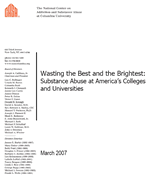
As a Leadership Educator dedicated to character education throughout America, I am deeply concerned about the pervasive substance abuse among our youth. Our young people represent the future of America. I believe that we must begin a full press committed response to this destructive culture of substance abuse by our nation's youth.

I had the opportunity this weekend to read Wasting the Best and the Brightest: Substance Abuse at America’s Colleges and Universities, a recently released report from The National Center on Addiction and Substance Abuse at Columbia University. The findings are startling and I encourage you to read the report. For your information and convenience, I have reprinted the press release in full.

[Reprinted from The National Center on Addiction and Substance Abuse at Columbia University – www.casacolumbia.org]

NEW CASA* REPORT FINDS HALF OF
COLLEGE STUDENTS BINGE DRINK,
ABUSE PRESCRIPTION AND ILLEGAL DRUGS

NEARLY ONE IN FOUR MEET MEDICAL CRITERIA FOR ALCOHOL, DRUG ABUSE AND DEPENDENCE

WASHINGTON, D. C., March 15, 2007 – Forty-nine percent (3.8 million) of full time college students binge drink and/or abuse prescription and illegal drugs, according to Wasting the Best and the Brightest: Substance Abuse at America’s Colleges and Universities, a new report by The National Center on Addiction and Substance Abuse at Columbia University.

The study also finds that 1.8 million full-time college students (22.9 percent) meet the medical criteria for substance abuse and dependence,[i] two and one half times the 8.5 percent of the general population who meet these same criteria.

The comprehensive 231-page report, the result of more than four years of research, surveys, interviews and focus groups is the most extensive examination ever undertaken of the substance abuse situation on the nation’s college campuses.

"It’s time to get the 'high' out of higher education," said Joseph A. Califano, Jr., CASA's chairman and president and former U.S. Secretary of Health, Education, and Welfare. "Under any circumstances acceptance by administrators, trustees, professors and parents of this college culture of alcohol and other drug abuse is inexcusable. In this world of fierce global competition, we are losing thousands of our nation's best and brightest to alcohol and drugs, and in the process robbing them and our nation of their promising futures."

The report finds that from 1993 to 2005 there has been no real decline in the proportion of students who drink (70 to 68 percent) and binge drink (40 to 40 percent). However, the intensity of excessive drinking and rates of drug abuse have jumped sharply:

  • Between 1993 and 2001 the proportion of students who binge drink frequently[ii] is up 16 percent; who drink on 10 or more occasions in a month, up 25 percent; who get drunk at least three times a month, up 26 percent; and who drink to get drunk, up 21 percent.
  • Between 1993 and 2005 the proportion of students abusing prescription drugs increased:
    • 343 percent for opioids like Percocet, Vicodin and OxyContin;
    • 93 percent for abuse of stimulants like Ritalin and Adderall;
    • 450 percent for tranquilizers like Xanax and Valium;
    • 225 percent for sedatives like Nembutal and Seconal.
  • Between 1993 and 2005, the proportion of students who:
    • Use marijuana daily more than doubled to 310,000.
    • Use cocaine, heroin, and other illegal drugs (except marijuana), is up 52 percent to 636,000.
Consequences of Abuse

Consequences of substance abuse on college campuses include:

  • 1, 717 deaths from unintentional alcohol-related injuries in 2001, up six percent from 1998;
  • A 38 percent increase from 1993 to 2001 in the proportion of students injured as a result of their own drinking;
  • A 21 percent increase from 2001 to 2005 in the average number of alcohol-related arrests per campus. In 2005, alcohol-related arrests constituted 83 percent of campus arrests;
  • 97,000 students were victims of alcohol-related rape or sexual assaults in 2001;
  • 696,000 students were assaulted by a student who had been binge drinking in 2001.
These statistics come from a variety of analyses using the best and most recent data available.

What's the Problem?

Nearly 38 percent of college administrators say the major barrier to more effective prevention is the public perception that substance abuse by college students is a normal rite of passage.

"College presidents are reluctant to take on issues they feel they cannot change and this growing public health crisis reflects today's society where students are socialized to consider substance abuse a harmless rite of passage and to medicate every ill," said Reverend Edward A. Malloy, CSC, Chair, The CASA Commission on Substance Abuse at Colleges and Universities II and President Emeritus, University of Notre Dame. "To change this culture, college and university presidents need help from parents, alumni, students, Greek and athletic organizations, state and federal governments. Substance abuse on college campuses is not just an issue of public health; it is one of self-interest. Failure to act in the face of foreseeable harm places schools at risk for damaging their academic reputations and liability lawsuits in the millions of dollars."

Other key findings:

  • Rates of daily smoking among college students dropped from 15 percent in 1993 to 12 percent in 2005 and of daily heavy smoking (half a pack or more a day) from nine percent in 1993 to seven percent in 2005. More than 1.8 million full-time college students are current smokers.
  • Fraternity and sorority members are likelier than non-members to drink (88 vs. 67 percent), binge drink (64 vs. 37 percent), drink and drive (33 vs. 21 percent), use marijuana (21 vs. 16 percent) or cocaine (3 vs. 1.5 percent), smoke (26 vs. 21 percent).
  • 37 percent of college students fear social stigma attached to substance abuse, which keeps them from seeking help. Only 6 percent of students who meet medical criteria for alcohol or drug abuse or dependence seek help.
  • 78 percent of college students who use illicit drugs have sexual intercourse compared to 44 percent of those who never use drugs.

"College presidents, deans and trustees have facilitated a college culture of alcohol and drug abuse that is linked to poor student academic performance, depression, anxiety, suicide, property damage, vandalism, fights and a host of medical problems," noted Califano. "By failing to become part of the solution, these Pontius Pilate presidents and parents, deans, trustees and alumni have become part of the problem. Their acceptance of a status quo of rampant alcohol and other drug abuse puts the best and the brightest--and the nation’s future--in harm’s way."

More than a decade ago, CASA convened its landmark Commission on Substance Abuse at Colleges and Universities to understand better the issues surrounding substance abuse at our nation's colleges and universities. The Commission issued two reports: The Smoke-Free Campus: A Report by the Commission on Substance Abuse at Colleges and Universities (1993) and Rethinking Rites of Passage: Substance Abuse on America’s Campuses (1994) which drew attention to the widespread problems of student smoking and drinking, and highlighted the growing problem of dangerous drinking among women. In 2002, CASA reconvened and expanded the Commission on Substance Abuse at Colleges and Universities II, to examine what progress, if any, had been made in the intervening years.

CASA is the only national organization that brings together under one roof all the professional disciplines needed to study and combat all types of substance abuse as they affect all aspects of society. CASA has issued 63 reports and white papers, published one book, conducted demonstration projects focused on children, families and schools at 161 sites in 67 cities and counties in 29 states plus Washington, DC and a Native American tribal reservation, and has been evaluating the effectiveness of drug and alcohol treatment in a variety of programs and drug courts. CASA is the creator of the nationwide initiative Family Day – A Day to Eat Dinner with Your Childrentm -- the fourth Monday in September – the 24th in 2007 -- that promotes parental engagement as a simple and effective way to reduce children's risk of smoking, drinking and using illegal drugs. For more information visit www.casacolumbia.org.

###


[i] As diagnosed from the fourth edition of the American Psychiatric Association's Diagnostic and Statistical Manual of Mental Disorders (DSM-IV), addiction occurs when a user experiences at least three of these seven conditions: increased tolerance and diminished impact of same usage, withdrawal syndrome, greater consumption over longer periods, inability to control use, preoccupation with obtaining the drug, important work or recreational activities abandoned, continued use despite the harm it causes. Abuse occurs when a user experiences at least one of these four conditions: problems at work, home or school, problems with family or friends, physical danger to self, trouble with the law.

[ii]Binge drinking three or more times in the past two weeks.

READ MORE

The National Center on Addiction and Substance Abuse at Columbia University Click here to visit site

Labels: , , ,

Friday, December 29, 2006

Leadership to Keep Children Alcohol Free

Leadership to Keep Children Alcohol Free, a unique coalition of Governor's spouses, Federal agencies and public and private organizations, is an initiative to prevent the use of alcohol by children ages 9 to 15. It is the only national effort focusing on alcohol use in this age group.

On this coalition's web site are some alarming statistics:

The Child
  • Each day, 7,000 kids in the United States under the age of 16 take their first drink.
  • Of the people who begin drinking before age 14, 47% become dependent at some point.
  • 63% of 8th graders and 83% of 10th graders believe that alcohol is readily available.
  • Almost 20% of 8th graders and 41% of 10th graders have been drunk at least once.
  • Ninth grade girls now report consuming about as much as ninth grade boys.
  • 33.9% of ninth graders reported consuming alcohol before they were age 13.
  • 5th through 11th graders exposed to alcohol advertisements have favorable beliefs about alcohol and say they are more likely to consume more alcohol.
The Family
  • Before the age of 18, 25% of children are exposed to family alcoholism, addiction or alcohol abuse.
  • Children of alcoholics are more likely to initiate adolescent drinking and develop alcohol disorders.
  • Parents drinking behaviors have initiated adolescent drinking.
  • Children are less likely to drink with positive parent interaction and clear expectations.
  • Drinking during pregnancy presents a risk to the fetus.
  • Older siblings alcohol use influences younger siblings
Teachers, principals, coaches, guidance counselors and school resource officers play important roles in preventing underage drinking. Schools must establish alcohol awareness and policies that set clear expectations and consequences. Students must be keenly aware that underage drinking is not acceptable behavior.

Click to visit Leadership to Keep Children Alcohol Free

Labels: , , ,

Wednesday, December 06, 2006

Alateen: Hope for Young People Effected by Another's Problem Drinking

Alateen is part of Al-Anon and is an extraordinary supportive program for young people effected by the negative consequences of living with the problem drinking of a relative or a friend. The program offers communities, law enforcement agencies, families and schools an appropriate program to deal with a serious problem of contemporary society.

Alateen is adapted from the philosophy of Alcoholics Anonymous and encourages youth to work collaboratively to:
  • Share experiences, strength and hope with each other
  • Discuss their difficulties
  • Learn effective ways to cope with their problems
  • Encourage one another
  • Help one another understand the principle of the Al-Anon program
  • Learn how to use the Twelve Steps and Alateen's Twelve Traditions
Read more:
http://www.al-anon.alateen.org/alateen.html

Labels: , ,

Friday, December 01, 2006

Behavioral Signs of Substance Use and Abuse

Educators and law enforcement officials, especially those assigned to juvenile bureaus and school resource officers, are called to vigilance in recognizing the signs of youth needing assistance.  Leadership and collaboration are critical qualities of the committed educator and police professional. Understanding and utilizing the resources available in the information age is another dimension of collaboration.

Substance use and abuse is one of the issues affecting those entrusted to our care. The American Council for Drug Education website is an excellent resource and highlights the signs that should raise a warning flag:
  1. Sudden decline in school achievement
  2. Cigarette smoking
  3. Shift in the child's peer group
  4. Erosion of parental trust
  5. Support of legalizing marijuana
  6. Marked personality changes
  7. Withdrawal from extracurricular activities
  8. Cutting classes, tardiness or truancy
  9. Deterioration in appearance
  10. Increased secretiveness
  11. Going out every night
  12. Disappearance of family funds
  13. Aggressive behavior
  14. Heavy use of over-the-counter preparations
Read More:
http://www.acde.org/health/signsymp.htm

Labels: , , ,

Monday, October 09, 2006

American Youth Alcohol Abuse Alert

Continuous headlines of alcohol related tragedies involving American youth include drinking-driving crashes and fatal alcohol poisoning.

The heart wrenching consequences of abusive youth drinking need a serious and immediate comprehensive community response that must begin in and through the schools. Awareness, prevention and intervention programs, particularly on the high school level, must be supported with leadership, vigilance and collaboration so the harmful effects of alcohol on American youth, their families and society can be eradicated.

Read: http://pubs.niaaa.nih.gov/publications/aa68/aa68.htm

Labels: , ,