Wednesday, March 04, 2026

Ethical Leadership in a Heightened Threat Environment

Operational Vigilance, Police-Community Partnerships, Preventive Culture

No community or infrastructure is immune — any location where terrorists could achieve retaliation, intimidation, publicity, coercion, or disruption is a potential target.

Ethical leadership, vigilance, and community partnerships are imperative to safeguard lives, protect property, and maintain public trust.


Introduction: The Current Threat Landscape

Recent events, including the mass shooting in Austin, Texas, the approaching 25th anniversary of 9/11, and the accelerating international conflict, underscore that no community or infrastructure is immune.

On March 1, 2026, a mass shooting outside Buford’s Backyard Beer Garden on West Sixth Street in Austin left three people dead, including the suspect, and at least 14 others wounded. The Federal Bureau of Investigation is investigating the incident as a possible act of terrorism, citing preliminary evidence suggesting a potential nexus to terrorism.

Schools, hospitals, houses of worship, financial institutions, museums, and other high-value properties remain potential targets.

Importantly, potential targets are not limited to hard targets. Any place where terrorists could achieve retaliation, intimidation, publicity, coercion, or disruption is a possible target.

Soft targets, unexpected locations, and spaces with community visibility must be considered in planning and preventive strategies.

The culture of ethical leadership, vigilance, and partnerships within the community is imperative. Agencies must work in unity with law enforcement, private security, and community leaders to anticipate threats, protect lives, and safeguard critical infrastructure.


II. Principles of Preventive Leadership and Security

A. Multi-Layered Approach

Effective protection requires a defense-in-depth philosophy, integrating:
- Physical Security: Hardening of facilities, access control, Crime Prevention Through Environmental Design (CPTED), and security vulnerability assessments.
- Personnel and Training: Certified individuals in key roles, staff awareness, crisis management training, and Warning Sign Response and Intervention programs.
- Procedural Measures: Standard operating procedures, crisis plans, and emergency preparedness exercises, including table-top, partial, and full-scale drills.
- Cybersecurity: Protection of critical operational and digital infrastructure, threat monitoring, and rapid response to hacking or cyber-attacks.

B. Ethical Leadership as a Foundation

Preventive culture relies on ethical leadership to:
- Ensure that operational decisions align with public trust.
- Promote collaboration between law enforcement, private security, and community partners.
- Strengthen the Police-Community Partnership (PCP™) philosophy, enabling shared situational awareness and coordinated response.


III. National Application and Model Initiatives

Through decades of my privileged professional involvement, these principles have been applied in New York City at high-profile venues and critical infrastructure.

Programs such as “Leadership Principles: Crisis Planning, Community Partnerships, Violence Prevention”, which I delivered to personnel from the NYPD, FDNY, the FBI, and security directors, demonstrate how ethical leadership, pa and preventive culture can be translated into actionable, replicable measures.

Aside from presentations nationwide, it was my privilege to conduct “Leadership Principles: Crisis Planning, Community Partnerships, Violence Prevention” keynotes to safeguard New York City.

Attendees included the NYPD, FDNY, security directors, property managers, and the FBI, with venues including:

·       Museums hosted by the Museum of Modern Art (MoMA)

·       Financial institutions and corporations hosted by The New York Stock Exchange

·       Hospitals hosted by Rockefeller University

·       Commercial and residential properties hosted by The Union Club of New York

·       Colleges, universities and religious institutions hosted by Columbia University, Fordham University, and the New York Athletic Club

These initiatives illustrate strategies that public security professionals across the nation can adapt and implement, reinforcing preventive measures while upholding ethical and operational integrity.

·       Key Law Officer articles supporting this work include:
Operation Sacred Shield™: Protecting America’s Houses of Worship in a Vulnerable World— February 16, 2026

·       Preventive Leadership & Human Encounter Model™: A 21st-Century Framework for Violence Prevention in Schools, Colleges, and Universities — February 14, 2026

·       The Police Community Partnership (PCP™) Philosophy: Igniting Ethical Leadership in Law Enforcement — February 2, 2026


IV. Communication, Alerts, and Community Awareness

Effective preventive strategies rely not only on internal planning and operational readiness but also on active communication with the community.

Agencies nationwide can look to successful examples like the NYPD’s approach, maintaining real-time communication channels, including social media, to issue alerts, guidance, and situational updates.

NYPD Advisory on Sensitive Locations — March 2, 2026 (Instagram release):
“The NYPD continues to closely monitor the ongoing hostilities in the Middle East. Following the mass shooting in Austin, Texas, and as Jewish communities celebrate Purim, we will maintain enhanced high-visibility patrols to sensitive locations citywide. As always, we remind the public to remain vigilant and notify the NYPD of suspicious activity by calling 1-888-NYC-SAFE or 911.”

These communications demonstrate practical application of operational vigilance and community engagement, reinforcing public awareness and partnership with law enforcement.


V. Conclusion: Ethical Leadership and Operational Vigilance for a Nation at Risk

Recent events, including the mass shooting in Austin, Texas, the approaching 25th anniversary of 9/11, and the accelerating international conflict, reinforce that ethical leadership, operational vigilance, and Police-Community Partnerships are imperative.

By applying multi-layered defensive strategies, ethical decision-making, and proactive community engagement, agencies can strengthen resilience, safeguard lives, and protect critical infrastructure.

These principles are grounded in decades of operational experience, nationwide presentations, and documented Law Officer publications, offering actionable guidance to public safety professionals.

As originally published by Law Officer, March 3, 2026. 


About the Author:

Vincent J. Bove is an accomplished leader, educator, and public speaker specializing in ethical leadership, resiliency, and mental health awareness for law enforcement. 

Bove has worked extensively with the NYPD and other first responder organizations, delivering keynotes, workshops, and training programs that focus on suicide prevention, morale-building, and emotional fortitude. 

A published author and advocate for integrity and service, Bove combines practical experience with scholarly insight to inspire and equip leaders across communities.

Educational Resources and References

Vincent J. Bove, CPP — Law Officer Articles

·       Operation Sacred Shield™: Protecting America’s Houses of Worship in a Vulnerable World — Law Officer, February 16, 2026

·       Preventive Leadership & Human Encounter Model™: A 21st-Century Framework for Violence Prevention in Schools, Colleges, and Universities — Law Officer, February 14, 2026

·       The Police Community Partnership (PCP™) Philosophy: Igniting Ethical Leadership in Law Enforcement — Law Officer, February 2, 2026

Complete list of Law Officer articles by Vincent J. Bove, CPP

Government Advisories and Guidance

Department of Homeland Security — National Terrorism Advisory System (NTAS)

The NTAS is the official DHS platform for communicating information about terrorism-related threats. It provides timely bulletins and alerts to federal, state, local, tribal, and private partners, including suggested protective actions for communities and organizations.

Federal Bureau of Investigation — Terrorism Prevention Resources

The FBI offers official guidance on reporting suspicious activity and understanding terrorism-related threats, including resources for law enforcement and the general public.

Additional Guidance

·       Agencies seeking to replicate Police-Community Partnerships (PCP™) initiatives can follow the frameworks described in the February 2, 2026, article.

·       For comprehensive strategies on school security, houses of worship, hospitals, and high-value infrastructure, refer to the detailed guidance in the above Law Officer publications.

Labels: , , , , , ,

Wednesday, January 10, 2024

21st-Century Policing: Orange County Intelligence Assessment Center Presentation


Thanks to the collaborative leadership of the U. S. Marshall for the SDNY, the NYPD Southern California Liaison, the County of Los Angeles Sheriff’s Department, and the Orange County Sheriffs Office, I was privileged to deliver a January 10, 2024 presentation in California. 

The presentation titled 21st-Century Policing: Safeguarding our Communities occurred at the Saddleback Church in Lake Forest, California. It was presented to members of the Orange County Intelligence Assessment Center. 

Attendees represented law enforcement agencies throughout California. They work in partnership on issues including domestic terrorism, civil unrest, violence prevention, criminal risks, and threat assessment. 

During the presentation, my topics included the following:

* American – Chinese Law Enforcement Comparisons

* Law Enforcement Safety, Morale, and Emotional Survival. 

* Community / Neighborhood Policing Concepts. 

*Building Partnerships Through Encounters. 

* Law enforcement / Community Bridges of Trust. 

* School Violence, Workplace Violence, Community Violence: Issues, and Response.  

* America’s Active Shooter Crisis

Attendees at the event included the following:

* Los Angeles Police Department

* Los Angeles Sheriff’s Department

* San Bernardino County Sheriff’s Department 

* Riverside County Sheriff’s Department

* Orange County Sheriffs Department

* NYPD

* FBI

* County of Los Angeles Sheriff’s Department 

* San Diego County Sheriff’s Department

* United States Air Marshals

* San Diego Police Department

* Anaheim Police Department 

* Orange County Probation Department

* UCLA Police Department

* University of California Irvine Police Department

It was my honor to address these law enforcement officials dedicated to protecting and serving our communities as they represent the best of all of us. 

Additional initiatives in California are underway, and it will be my privilege to support all dedicated to public safety.  

Testimonial

Mr. Bove:

We want to thank you for attending our working group meeting last week in Lake Forest and addressing our law enforcement partners.  


Your words of encouragement and the importance of being open to encountering individuals provided a valuable perspective that can positively influence interactions between law enforcement and the community. 


Thank you for taking the time to share your experience and wisdom with our working group. Your dedication to the law enforcement profession is truly commendable.  


Respectfully,

Genoveva (Veva) Gomez

Analyst / TFA FBI LBRA-5

Orange County Intelligence Assessment Center

Orange County Sheriff’s Department


About the Author


Vincent J. Bove is a national speaker and author on critical American issues. He has over 300 published works, and eighteen cover stories for The Chief of Police. His most recent books are Reawakening America and Listen to Their Cries.

Bove is recipient of the FBI Director’s Community Leadership Award, and former confidant for the New York Yankees.

He served as spokesperson for a coalition of Virginia Tech tragedy victim’s families, and has conducted extensive leadership presentations for the FBI, the United States Military Academy, law enforcement, educators, security professionals, and students nationwide.

 “We must all serve as catalysts to protect our workplaces, schools, communities, public spaces, and houses of worship.  Public safety demands leadership, vigilance, and collaboration.  Security demands comprehensive enhancements, on-going training, effective response to warning signs, and building bridges with law enforcement, private security, and every member of the community.”  -Vincent J. Bove

www.vincentbove.com  

Contact: vincent@vincentbove.com

Twitter: vincentjbove

Photo: OCIAC event (📸RALLC)

Related:

21st Century American Policing Demands

Ethical Leadership

Labels: , , , , , , , , , , , ,

Thursday, May 18, 2023

21st Century American Policing Demands Ethical Leadership

Indisputably, these are remarkably challenging times for policing, and the eyes not only of the nation, but of the world are upon us.

Let us reflect on issues, provide solutions, and enhance our dedication to lives of moral courage.

NYPD Graduation: A Reflection

First, an observation from the April 24, 2023 graduation of the newest NYPD officers.

The graduation of over 500 recruits took place in New York City at Madison Square Garden.

Prior to graduating, the recruits were dressed impeccably with new uniforms, complete with immaculate white dress gloves.

As memorialized on the NYPD Police Academy Twitter page, one of their instructors thunderously shared an inspirational reminder, boldly proclaiming the following to all:

“You are a servant to the people that are out there, do you understand me.”

The riveting response of the recruits, who would become the newest ethical protectors of the NYPD in a matter of minutes, was a resounding “Yes Sir.”

The instructor continued, “You are about to become police officers, you are going to act like it.” This direct, no-nonsense pronouncement reminded all to serve.  For all embarking on the next phase of their profession, it was emphatic.  Their vocation demands high ethical standards, and an unwavering commitment, fortitude, and discipline.

As we reflect on his words of wisdom, we proceed with reflections that include an anthology of excerpts from articles in The Chief of Police.

It is my hope that these thoughts encourage law enforcement to remember the dignity of their profession. This profession is vital, not only to their communities, but to all of America. 

Let Us Pause

“This year, the names of 556 fallen officers will be added to the Memorial. 556 lives cut short as they risked their lives, working to make things safer for the community and people that they served. It’s a solemn reminder to the nation that each day is fragile. Not a moment goes by where we forget our brave men and women in blue for the ultimate sacrifice they have given. Their memory lives on.” [1]

Marcia Ferranto, CEO of the National Law Enforcement Officers Memorial Fund

 The horrific acts of violence against police demands our solemn pause and actions.

Protecting our communities is a shared responsibility. The police and the community must be one and inseparable. We must be fully dedicated, without compromise, to protecting one another. Problems ignite and fester whenever the breakdown between the police and community occurs.

Every law enforcement member who died protecting and serving our communities deserves America’s eternal gratitude, remembrance, and honor.

We must also be forever mindful of their families and support them with unwavering compassion, respect, and dignity.

Let us honor them and forever hold their families, friends, and law enforcement colleagues in our prayers, and take every action necessary to reawaken the nation.

Some thoughts deserving reflection, resolve, and response:

"This past year has been one of the most dangerous years for law enforcement in recent history due to the increase of violence directed towards law enforcement officers as well as the nationwide crime crisis, which has seen criminals emboldened by the failed policies of pandering prosecutors and cynical politicians.”

"If these violent criminals are willing to commit brazen acts of violence against the men and women of law enforcement, we can't begin to fathom what heinous acts they are willing to commit against law-abiding citizens.

As crime rates continue to rise, more citizens in this country are justifiably living in fear, constantly wondering if they too will become a victim. Law-abiding citizens saw the real-life consequences of what happens when elected officials embrace pro-criminal, revolving-door policies and make decisions that put the interests of violent offenders ahead of public safety. These decisions—failures to prosecute violent offenders for their crimes or, even worse, releasing repeat offenders arrested for crimes who show a propensity for escalation of violence—make our communities less safe. These rogue prosecutors are putting innocent lives at risk. When there are no consequences for breaking the law, more people will break the law and crime will increase.

“I call on Americans in every community across the country to join us in taking a stand—to say, ‘Enough is Enough!’ Truthfully, the violence against those sworn to serve and protect is beyond unacceptable; it’s a stain on our society, and it must end. It is incumbent upon our elected officials and community leaders to stand up, support our heroes, and speak out against the violence against law enforcement officers.” [2]

Patrick Yoes, National President of the Fraternal Order of Police

Principles of American Policing

Although Sir Robert Peel’s Nine Policing Principles are timeless, contemporary issues demand principles complementing tradition while respecting current realities.

The Principles of American Policing has been formulated on the foundation of professionalism to enhance dialogue, communication, and trust between police and communities:

1.  Being pro-police and pro-community is inseparable, indefatigable, and preeminent. Police must at all times remain fully committed to protecting and serving the public through character, ethics, and leadership that is total and whole-hearted. Police must be guided by a moral compass that honors the community, Constitution, and Bill of Rights.

2.  Respect must be the heart of the police and it must be unwavering for the profession, colleagues, and community. Respect can only be earned through integrity, accountability, and transparency. These qualities build trust, legitimacy, and collaboration.

3.  Police deserve that every level of government provide the resources necessary for proper police staffing, training, and community service.

4.  Initiatives enhancing police-community relations must continually be implemented and include citizen appreciation events, National Night Out, neighborhood block watches, and citizen police academies. Programs for youth, the future of the nation, are vital. These include school resource officers, youth police academies, character education, and mentoring initiatives.

5.  Police deserve the latest and most effective technology to protect themselves and the public.

6.  Moral courage must be encouraged, as police must be empowered to make decisions that are legal, ethical, and moral.

7.  Patriotism is mission-critical. Honoring America, our flag, and our military personnel must be part and parcel of the police officer’s creed and take place at every event.

8.  Police interventions must always be proportional, constitutional, and uphold quality of life issues deserved by all communities.

9.  Police require a discerning recruitment process, education credentials, and ongoing training/certifications on issues including constitutional policing, diversity, civil rights, race-relations, violence prevention, community policing, crisis management, ethics, leadership, gangs, private security, and use of force.

Ethical Policing Leadership: World Class Certification Program

Along with protecting those who protect us, we must also ensure they have world class training as


noted in the third principle of American Policing.

Therefore, “21st Century Policing: America’s Ethical Protectors” is a necessity for law enforcement.

Ethical training, development, and certification is critical to the entire law enforcement profession.

Law enforcement agencies nationwide require on-going ethical policing certification programs fundamental to their mission.

Here are some pillars of a program spotlighting ethical policing as the hallmark for professionalism.  Reasons include the following:

·         Ethical policing certification is a proven educational model that strengthens operational efficiency, improves morale, and increases respectability.

·         Ethics empowers the rank-and-file of an agency with leadership skills, vigilance enhancement, and collaborative expertise.

Ethical Policing addresses state-of-the-art ethical principles based upon recognized issues vital to the profession. This is the most effective way of developing, attaining, and sustaining the vision, mission, and core values of the agency.

·         Ethical Policing strengthens agency accountability, and improves community trust through principles enhancing expectations, performance, and responsibility.

·         Ethical certification assists in limiting the agency’s liability as it demonstrates that ethical training has been conducted by an independent respected authority.

This program, which I developed and presented for a partnership of the Bergen County Police Chiefs Association, Bergen County Prosecutors Office, and Bergen County Sheriff’s Office, has an agenda including the following:

·         Ethical policing principles

·         Principles of American Policing

·         Emotional Intelligence

·         Cultivating a reputation of respect

·         Building community trust

·         Neighborhood Policing

·         Sexual harassment

·         Crime prevention

·         Communication skills

·         Mental health and Officer Safety

·         Conflict resolution

·         Crisis management

It has also been my honor to present versions of this program for the FBI, the U.S. Postal Inspection Service, U.S. Air Force, and the National Conference on Ethics in America at the U.S. Military Academy at West Point.

Parenthetically, there are also opportunities that should be made available by law enforcement for the community relative to ethical certifications and community trust.

These initiatives fall under Community Policing, or as the NYPD refers to it, with some philosophical variation, Neighborhood Policing. 

One such community policing initiative is a Citizen Police Academy, one of which I myself completed 25 years ago with the Teaneck, New Jersey Citizens Police Academy.

These bridge builders allow citizens and police to forge trust, while understanding and enhancing an understanding of the criminal justice system, and our shared responsibility.

American School Violence Demands Law Enforcement Leadership

It is irrefutable that our school violence crisis demands law enforcement leadership.

Recently, a comprehensive report titled America’s School Violence Crisis: A Special Report, School Violence: Toxic Personalities, Warning Signs, Countermeasures was published by The Chief of Police.

Although an understanding of the entire report is essential, this excerpt is directly associated with law enforcement responsibilities:

School resource officers (SRO’s): one of the most important school violence prevention, character education, and community policing initiatives. But to be most effective, the SRO program demands the most qualified, trained, certified, and dedicated police professionals available.

Qualified back-up officers must be available of assigned SRO’s for the program to have credibility.

Additionally, school resource officers should study the following documents:

·      America’s School Violence Crisis: A Special Report, School Violence: Toxic Personalities, Warning Signs, Countermeasures

·      Early Warning Timely Response: A Guide to Safe Schools

·      Practical Information on Crisis Planning: A Guide for Safe Schools and Communities

·      The Final Report And Findings Of The Safe School Initiative: Implications For The Prevention Of School Attacks In The United States

·      Threat Assessment in Schools: A Guide to Managing Threatening Situations and To Creating Safe School Climates

·      Averting Targeted School Violence, A U.S. Secret Service Analysis of Plots against Schools

Ethical Responsibility of Elected Officials

We must also demand that our elected officials, whom we have entrusted with critical leadership roles, provide ethical leadership to enact laws to support law enforcement and protect society.

Sensible laws are required, without the continuous lame excuses, outlandish interpretations of the Second Amendment and egregious misunderstandings of “well-regulated.”

Individuals who have sinister intentions, or who are not mentally qualified, must never be enabled to purchase weapons. Comprehensive background checks, training, certifications, and licensing is a community responsibility.

Our elected officials must also provide the leadership to keep dangerous individuals in jails.

"What we got to do, if we really want to see homicides go down, is keep bad guys with guns in jail. Because when they're in jail, they can't be in communities shooting people. So when people talk about what are we going to do different, or what we should do different, what we need to do different, that’s the thing that we need to do different.

"We need to keep violent people in jail. Right now, the average homicide suspect has been arrested eleven times prior to them committing a homicide…That is a problem. That is a problem." 

Robert J. Contee III, former Chief of the Metropolitan Police Department.

 Final Reflections

Recently, The Chief of Police published
America’s Head on Collision: A Culture of Violence and Crisis of Character.

The article pinpoints the horrific violence and character crisis, exemplified by active shooter incidents and corruption, undermining the moral compass of the nation.

Additionally, the FBI recently released Active Shooter Incidents in the United States in 2022.  This document further highlights our violent society, designating 50 shootings in the 2022 as active shooter incidents.

These glaringly illustrated signs of the times must not define America.  We must turn this venomous tide with the antidote of moral leadership, building bridges of trust and respect between the community and police. 

These bridges are America’s only hope, and we must be fully committed to a unity of effort. 

About the Author

Vincent J. Bove is a national speaker and author on issues critical to America with over 300 published works, and eighteen cover stories for The Chief of Police. 

His most recent books are Reawakening America and Listen to Their Cries.

Bove is recipient of the FBI Director’s Community Leadership Award, former confidant of the New York Yankees, and served as spokesperson for a coalition of Virginia Tech tragedy victim’s families.

Note Well: this article was published in The Chief of Police, July 17, 2023 edition and distributed hardcover to law enforcement executives nationwide. 

It is also published online as follows:

https://www.copmag.org/reawakening-the-nation-2/

This published work is based on a fourteen year partnership of Reawakening America LLC with the National Association of Chiefs of Police. The partnership includes 18 cover stories and 58 articles authored by Vincent Bove without interruption to quarterly magazine publications.

 “We must all serve as catalysts to protect our workplaces, schools, communities, public spaces, and houses of worship.  Public safety demands leadership, vigilance, and collaboration.  Security demands comprehensive enhancements, on-going training, effective response to warning signs, and building bridges with law enforcement, private security, and every member of the community.”  Vincent J. Bove

www.vincentbove.com 

Contact: vincent@vincentbove.com

Twitter: vincentjbove

Related:

FBI: Active Shooter Incidents in the United States in 2022

America’s Head-On Collision: A Culture of Violence and Crisis ofCharacter

America’s Active Shooter Crisis Demands Visionary Leadership

Understanding the Profession

School Violence: Toxic Personalities, Warning Signs, Countermeasures

Photos

1.  NYPD pre-graduation formation, Madison Square Garden, Apr. 24, 2023. (Credit: NYPD Twitter Police Academy)

2.  NYPD graduates, Apr. 24, 2023. (Courtesy NYPD Twitter, Commissioner Sewell account)

3. Chicago Police Department funeral for Officer Ella French, Badge 15013. (Credit CPD Twitter)

4. Fraternal Order of Police (FOP) statistics for 2022. (Credit: FOP)

5. NYPD Counterterrorism officer with canine, Rockefeller Center. (Credit NYPD Counterterrorism Twitter

6. NYPD funeral of Officer Jason Rivera, Jan. 28, 2022, Fifth Avenue, NYC. (Credit: NYPD PALS, Twitter)

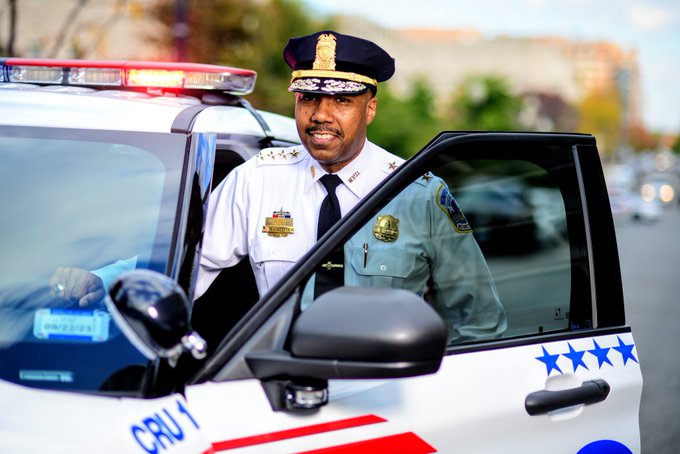
7. Robert J. Contee III, former chief of the Metropolitan Police Department.

8.  FBI Active Shooter Cover (Credit FBI)

Labels: , , , , , , ,